Ancient Egypt
A study of ancient Egyptian civilization from the unification of Upper and Lower Egypt to its incorporation into the Hellenistic and Roman world, with particular attention to its political organization, religion, writing system, and daily life.
60-Second Review
Express reviewA condensed, point-by-point summary of the module, for reviewing right before a test or exam.
- The Nile and the Unification of Upper and Lower Egypt. Around 3100 BCE, Narmer (identified by tradition with Menes) unified Upper and Lower Egypt under the double crown.
- The Old Kingdom: The Age of the Pyramids. The Old Kingdom (2686-2181 BCE) consolidated pharaonic power and produced the pyramids of Saqqara and Giza.
- The Middle Kingdom: Reorganization and Expansion. The Middle Kingdom (2055-1650 BCE) reorganized the administration and expanded Egyptian control over Nubia.
- The New Kingdom: The Great Pharaohs. The New Kingdom (1550-1077 BCE) was the height of Egyptian splendor, home to Hatshepsut, Akhenaten, and Ramesses II.
- Egyptian Religion: Polytheism, the Cult of the Dead, and Mummification. Egyptian religion was polytheistic, and its cult of the dead centered on mummification and the weighing of the heart before Maat.
- Hieroglyphic Writing and the Rosetta Stone. Hieroglyphic writing, unreadable for centuries, was deciphered by Champollion in 1822 with the help of the Rosetta Stone.
- Society and Daily Life in Ancient Egypt. Egyptian society was hierarchical, with the pharaoh at its peak, scribes holding a privileged position, and the majority of the population made up of peasant farmers.
- The Decline of Ancient Egypt and Its Integration into the Hellenistic and Roman World. Following the decline of the New Kingdom, Egypt was conquered in turn by Assyrians, Persians, Greeks, and Romans, down to 30 BCE.
This module continues after "Mesopotamia" in the syllabus. If you haven't reviewed it yet, it may help set the context.
Key points
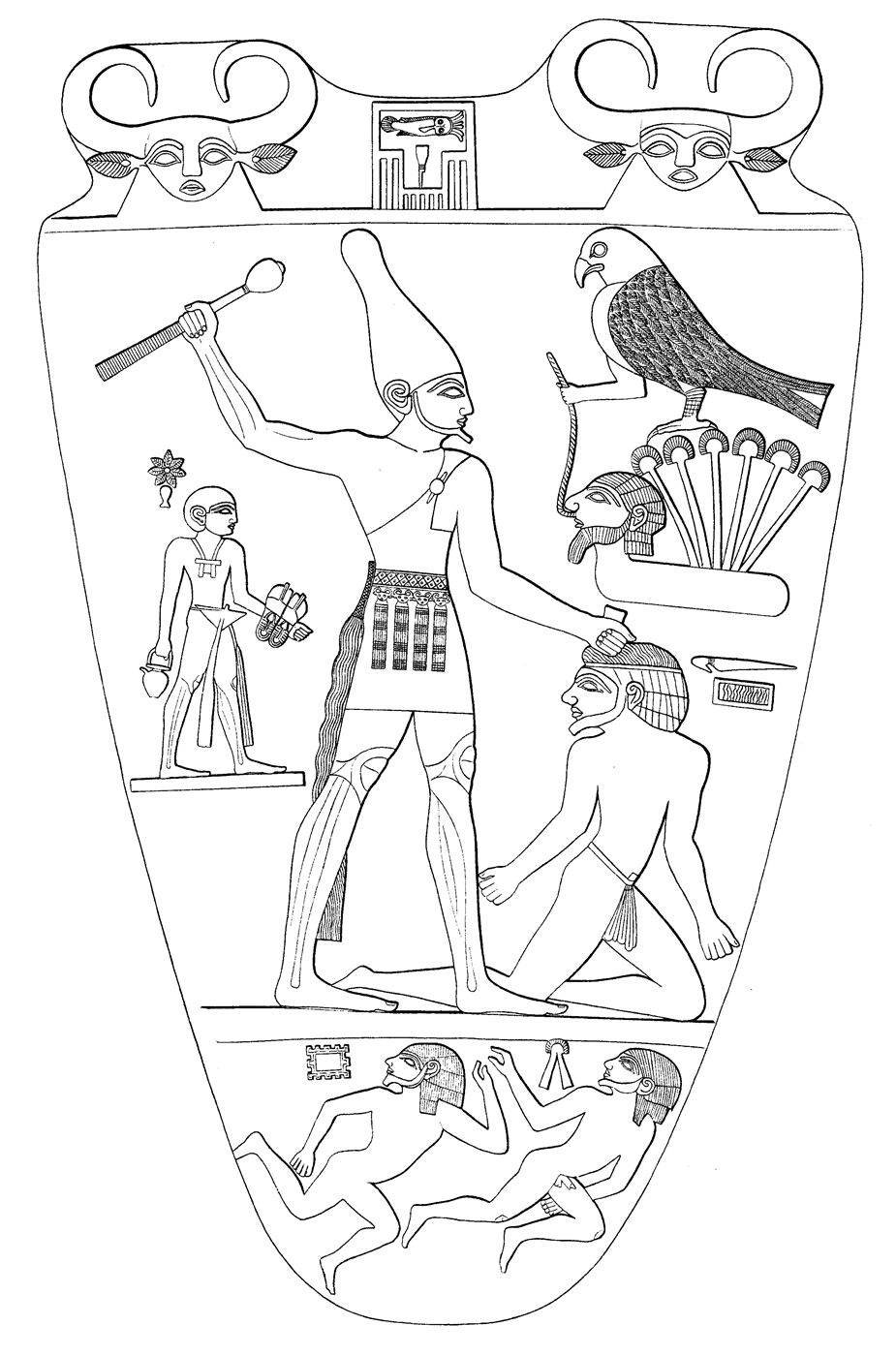 1. The Nile and the Unification of Upper and Lower Egypt
 2. The Old Kingdom: The Age of the Pyramids33. The Middle Kingdom: Reorganization and Expansion
 4. The New Kingdom: The Great Pharaohs55. Egyptian Religion: Polytheism, the Cult of the Dead, and Mummification
 6. Hieroglyphic Writing and the Rosetta Stone77. Society and Daily Life in Ancient Egypt88. The Decline of Ancient Egypt and Its Integration into the Hellenistic and Roman World
Visual module map
Alternative visual view: a simplified sequence of some of the module's key points, in their order within the syllabus.
Your module mastery
0% (overall measurement)A rough estimate based on the key points reviewed, not an exact measurement of actual mastery.
Final test
You need to review all key points to unlock the final test.
Optional mini-games
Extra practice, with no penalty, to reinforce the module's content.
Further reading
Bibliography and cited sources used to create this module.
- Grimal, N., A History of Ancient Egypt, Blackwell, Oxford, 1992.
- Shaw, I. (ed.), The Oxford History of Ancient Egypt, Oxford University Press, Oxford, 2000.
- Wilkinson, T., Ancient Egypt: A Very Short Introduction, Oxford University Press, Oxford, 2016.
- Parra Ortiz, J. M., Historia de la momificación egipcia, Trotta, Madrid, 2015.
- UNESCO, "Memphis and its Necropolis – the Pyramid Fields from Giza to Dahshur", World Heritage List, whc.unesco.org.